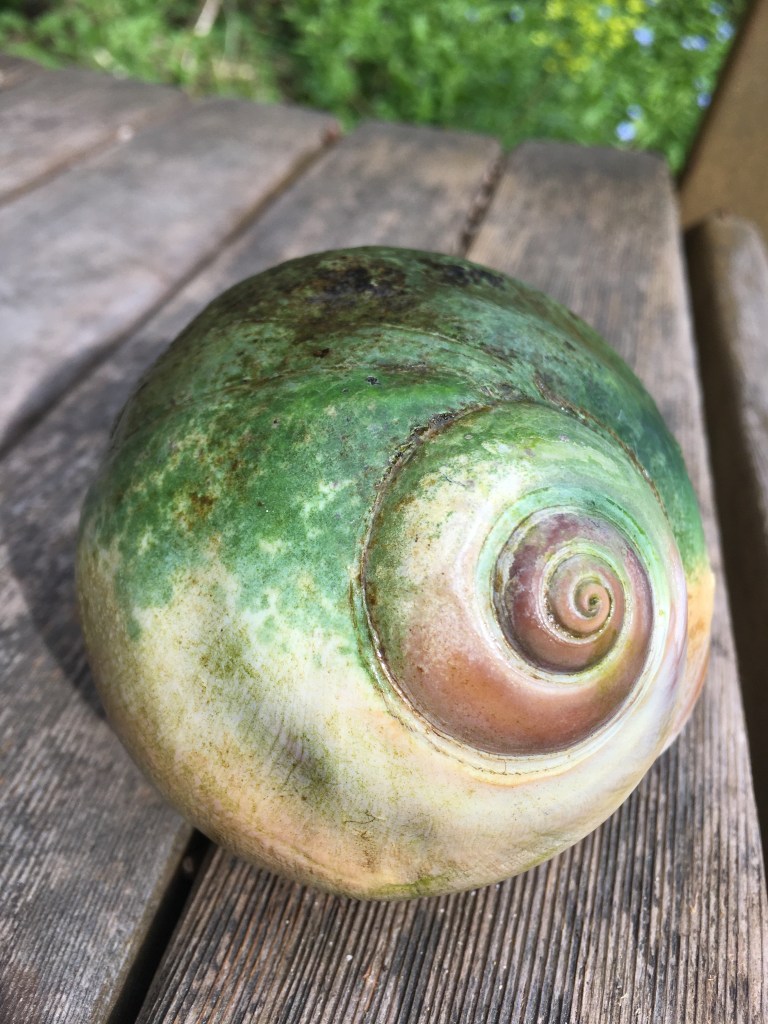
A typical adult moon snail (three species of which inhabit the Salish Sea) needs four days—plus a clam—to just reach her meal. Four entire days to drill a perfectly round hole through the clam’s hard shell, all the while fending off predators, including her own kind. Then she needs another full day to fully ingest the clam, after turning it to a liquid and inserting her specially designed moonsnail “straw” to suck out her moon-y clam soup. Time consuming and extraordinary, yes?
I have my eldest son to thank for leading me down the online rabbit hole to educate myself on these most amazing creatures, and expanding my tiniest knowledge about the sea in which I I love to swim and one of the creatures there that I find most fascinating and beautiful.
I returned from a joyful swim with Liz yesterday afternoon clutching this beautiful specimen in my cold hand when A. quizzed me on whether moon snails reuse discarded shells. He sternly suggested that I find out before claiming whole ones and possibly depriving living creatures of a good home.
I couldn’t argue. He was absolutely right.
All I knew with certainty was that hermit crabs need discarded shells to survive—live at all—as they cannot grow their own. I had no idea if moon snails did the same. I thanked him for pointing this out while I also reassured myself and him that the shells I do collect are almost all entirely missing huge sections at best or are mere fragments unable to provide a suitable home for anything requiring four walls and roof—or in this case a calcified round miracle of nature, perfectly designed and never in need of plumbing or electricity or wifi.
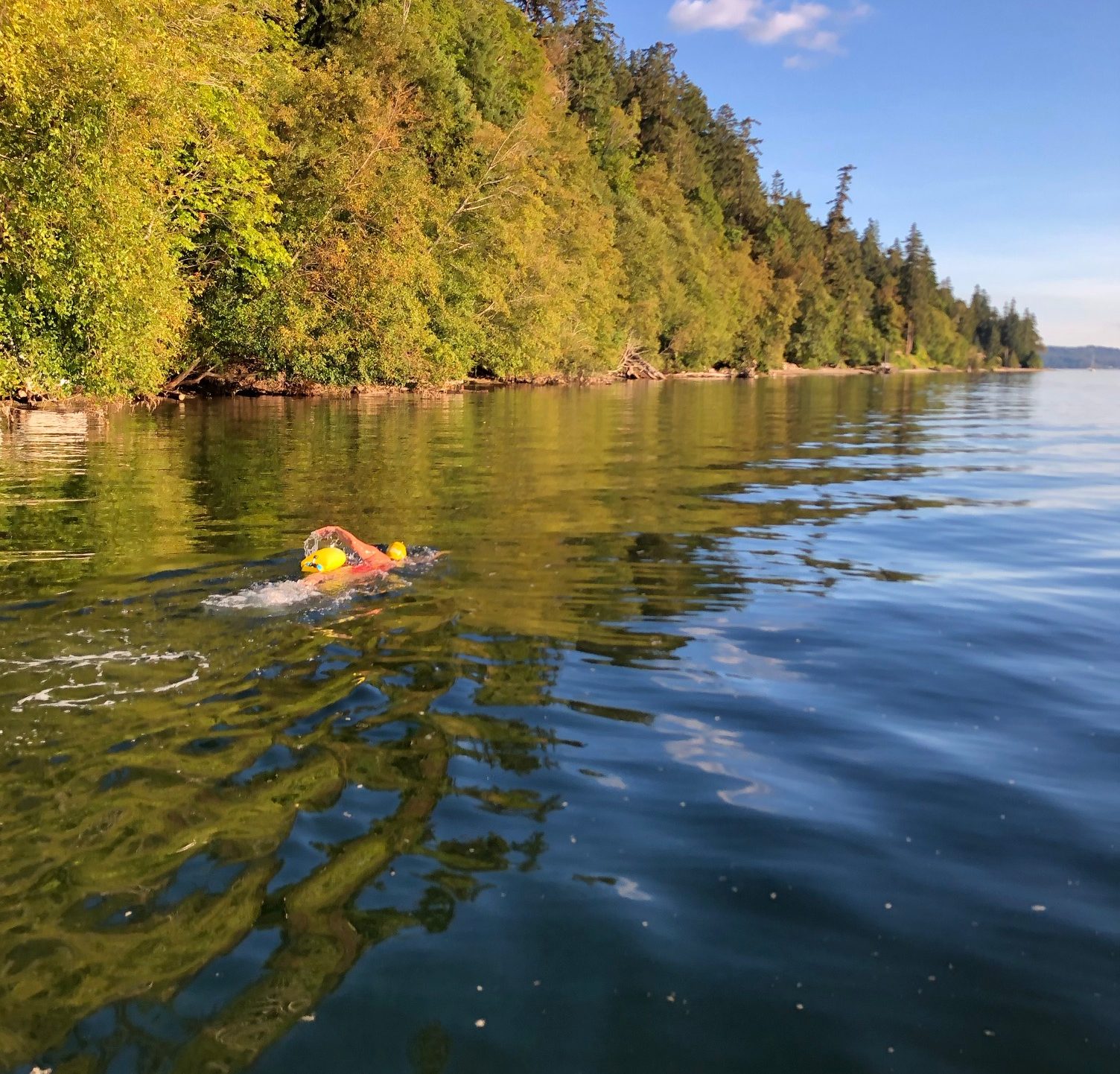
My research led me deeper into the world of the moon snail, and its nesting habits, of which I was intently interested. Yesterday, Liz and I headed north from the landing through happy chop with fuzzy water, and a steady southerly wind blowing warm spring air during an extremely low tide. The combination of the low tide, warmer waters and our pathway northward through the shallows revealed dozens of moon snail nests along the way. These grey collar-shaped nests sat silently on the sea floor, each one containing millions of eggs.
To build these nests and protect the eggs, a moon snail mother coats her entire foot with sand, coats the sand in mucus, laying her eggs on top and then covering the eggs with another layer of sand.
We paused to admire a nest from the depths, and I lifted it tenderly, surprised by the firmness of its form. Setting it carefully down, Liz remarked that she appreciated my comfort touching things in the water, herself more accustomed to fresh water—and not a fan of high sensory things like sea creatures. I realized in that moment how at home I feel in the saltwater. I look forward to summer, brushing up against bright green masses of seaweed and palming moon jellies in my hand with a closed finger pull through warmer waters. I told Liz how I look forward to the return of the crabs too, and small fish, starfish and the smell of salt baking in the sand and mudflats at low tide. How true that the places where you play as a child stay with you forever. You can not escape the strength of the smells and sounds and feelings formed in childhood.
The air and waves bounced us northward, past the entrance to Fletcher Bay, our frequent stops highlighted by Cheshire Cat grins and relief hovering like cherry blossoms as our bodies bobbed and danced through the waves.
I followed Liz’s lead and floated on my back, letting the water hold me, my body stretched out like a starfish, free of land and worry for a moment.
Our return trip was bumpy and slow, we were in no hurry. We came here to regroup, let go, float and connect. Before setting ashore we passed by the twin pilings west of the landing. Spider crabs tip toed around small clusters of white and brown anemones.
Time slowed down for a moment for both of us. Afterwards, we swam to shore rising up onto sharp barnacles over uneven rocks, tipsy and unsteady as toddlers as gravity took hold.
We dressed car side then sipped tea, sitting on the sun kissed beach, strewn with broken shells and pebbles. We spoke of matters big and small, savoring the after glow of a cold water swim.
Meanwhile out below the waves, millions and millions of moon snail eggs incubate, waiting to hatch when the nests break down as they ought to, and release them into the sea to claim their rightful place in the only world they will ever know.
What lucky little moon snails they will be, if only we humans can help preserve and protect the only world for all of us.
It’s entirely up to us.
 Mary Swims