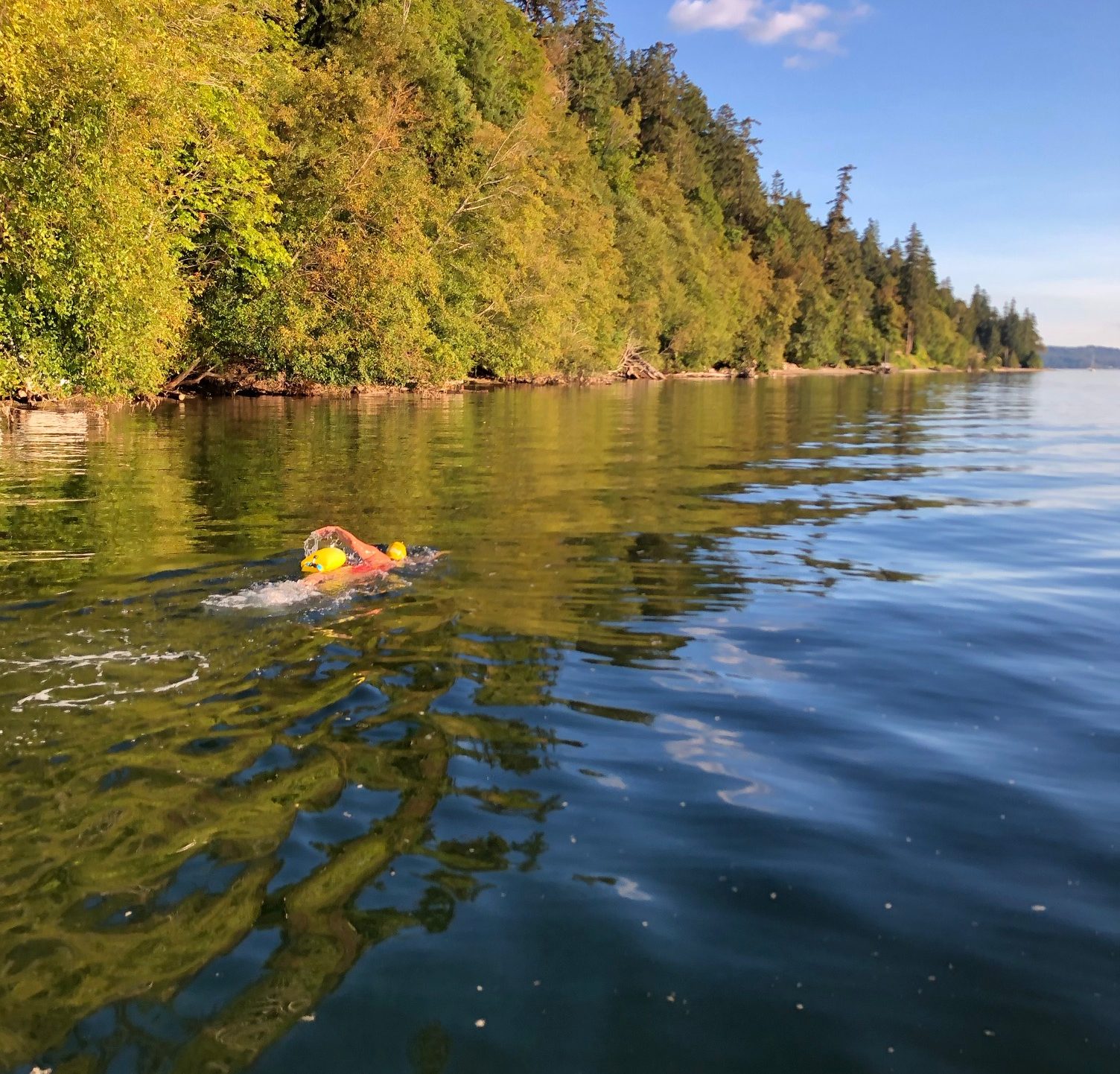
It took me awhile to get here. And my journey has only just begun.
I reached the Pacific Ocean. But I didn’t make this journey alone. Every journey I have embarked on has involved other people, other voices, other stories.
None of us are ever truly alone.
My husband was central to me making it out here, to the Pacific, off the north coast of Washington State. I had a bit to do with it too.
Josh is good with gear and planning and being prepared for all manner of mishaps, whereas I excel in spontaneity, determination and forgetting equipment—this time it was a mask.
After a full Friday of work and chores and an evening gig I dashed home to help finish preparing for our adventure. Our goal was to go to the wilds, sleep in a tent and bravely leave our two teenage sons home alone for the first time ever for one glorious night.
We carefully packed our back packs with dried food and water and hopped into our new used car, drove through pouring rain for four hours, passing by an elk herd and clear cuts and small and big towns until we reached our driving destination—Lake Ozette. Along the way, as the rain drops hammered down and we looked forward into a sky thick with grey clouds, Josh offered alternatives, including a day hike or waiting for better weather another time—even a night at a casino hotel.
I eagerly and happily replied, with something akin to, “ No way. Let’s do this, rain or no rain, I want to sleep in a tent with you and see the ocean!” Besides I had no mask and was hell bent on swimming in the ocean.
The night prior when we were deciding where to go on the Olympic Peninsula, ruling out many places as snow still lies heavy on the ground, Josh mentioned Lake Ozette, a medium sized lake just three miles in from the Pacific Ocean.
“Yes!” I replied. My whole being kicked into overdrive as I anticipated seeing the ocean again, hearing the ocean, and of course, feeling the cold ocean water on my skin. Once we decided, nothing was going to stop us from getting there. I quietly tucked my swimsuit, goggles and cap into my backpack, the latter two items overkill perhaps but it just felt right to have my complete kit.
Our sons were equally thrilled with our adventure, as they had plans of their own. This was going to be good for all of us.
By the time we reached the parking lot at Ozette, the skies had cleared and with delight we strapped on our packs as the evening mosquitos hovered around our shoulders under a rain-free sky. I was so happy with the weather I didn’t mind the bugs.
The three-mile hike out to Cape Alava was a magical journey, with much of the trail a meandering stroll over wooden boardwalks built to protect the fragile flora and fauna bursting out of the swampy ground.
Miles before arriving to the trailhead we had driven by acres of skunk cabbage in full bloom, springing from lush meadows and beside shady ponds and pastures. I was thrilled with the chance to see (and yes, smell—so aptly named: skunk) my absolute favorite flower of spring.

Along the trail I was delighted to find this exquisite plant’s glowing yellow flowers and rain-soaked giant leaves glistening, lining both sides of the trail as we made our way to the beach.
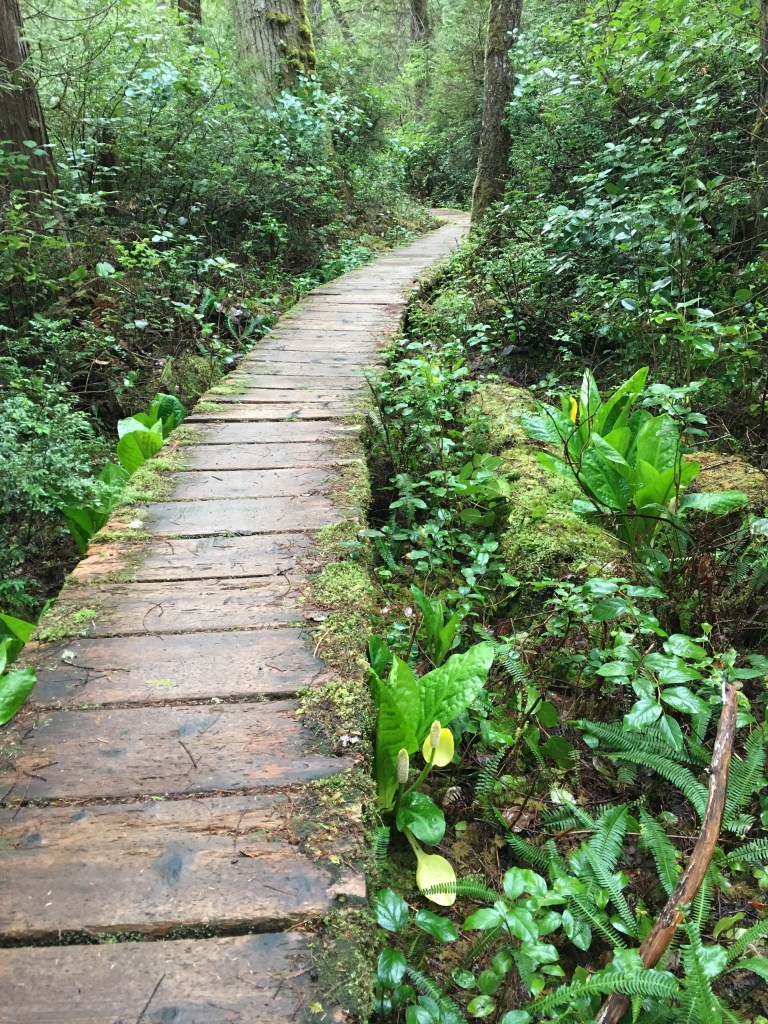
We hiked quickly, anxious to reach the beach before dark, only slowed by my endless need to capture photos along the way, my mind easing like it does swimming—each step like a stroke, pulling me towards calm and happy anticipation at what other wonders lay before me.
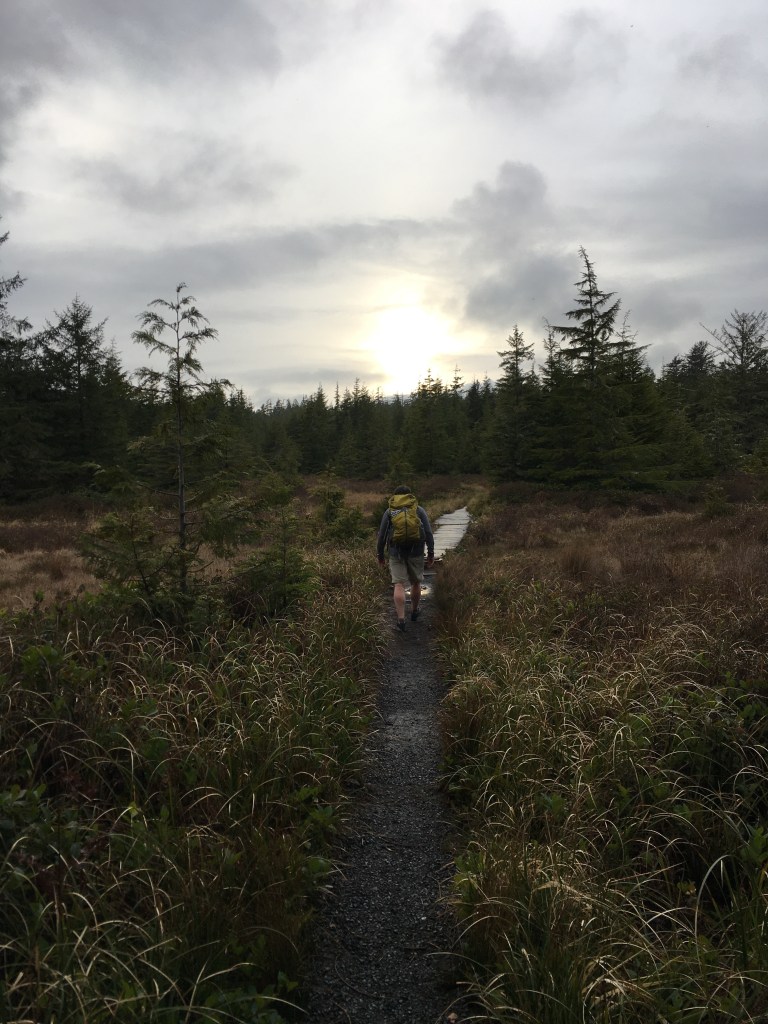
After passing through the woods and a few open meadows, we caught sight of the ocean through the trees. We made our way down the steep muddy trail to the campground, a series of rugged campsites tucked along the shore beneath fir, hemlock and cedar, bordered by a strip of lush meadows. We crossed a log bridge over the small river and pitched our tent looking out over the beach piled knee deep with seaweed and kelp, and beyond to small islands and rocky sea stacks, glowing black as the sun set.
After pitching our tent, a fellow camper offered us the heat of their fire, as they headed off to bed. Another unexpected gift of the day, as we rarely if ever build fires when we camp. Seagulls picked at treasures tucked in the mounds of seaweed, and the cry of eagles broke through the distant crash of waves as we huddled over our dinner of couscous, dried peas and mango, warming our hands over the fire.

The dark came quickly, blending the ocean and sky into one dark mass. With our toothbrushes in hand we sunk step by step through the soft mounds of seaweed to clean our teeth beside the dark water. A few herons fished in the shallows, their long legs like sticks breaking the surface of the water.
In the morning we woke inside our yellow tent, not entirely well-rested, but pleased that we had made it this far. The tide was low and with our hot tea and instant coffee in hand we scrambled over the rocky landscape to gaze at the miles of miniature islands and plan our day’s adventure. As we left Cape Alava behind, Josh spotted a well fed brown rabbit snacking on weeds along the trail to the beach.
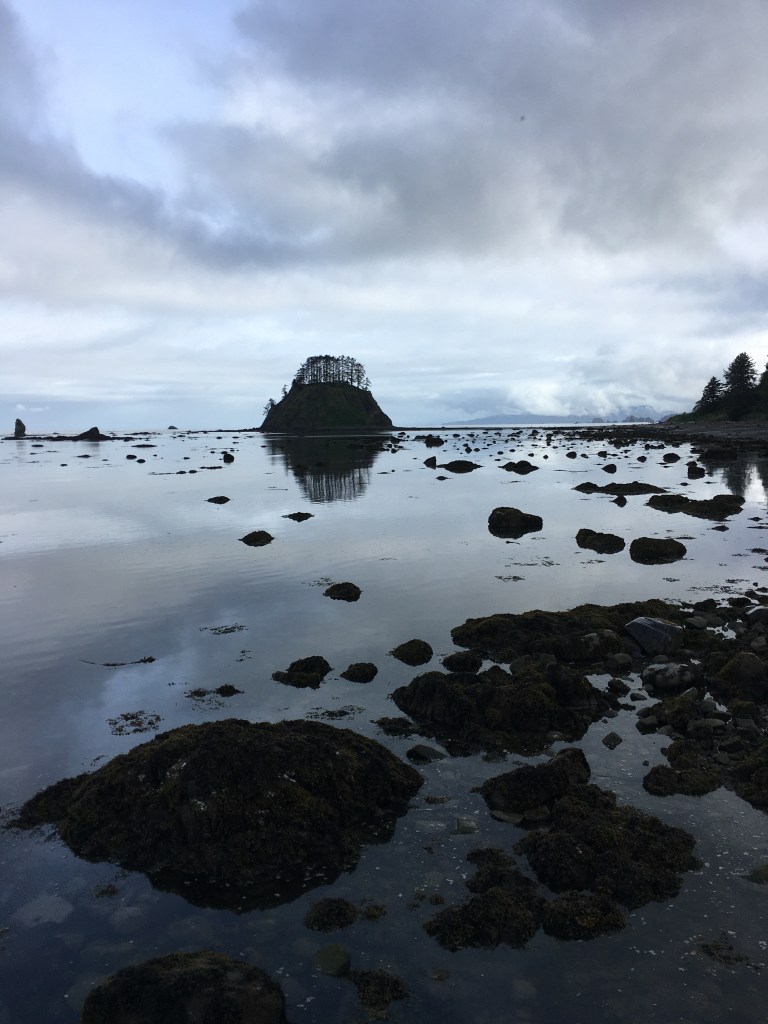
Our second day was one of jaw-dropping beauty, joy and sorrow, as we hiked three miles south along the beach, over smooth rocks in every shade of grey, the mighty Pacific crashing and calling to our right, the intermittent cries of seagulls and eagles gracing our ears, tangles of brown kelp harboring small crabs and snails beneath our feet, an endless view of saltwater studded with ancient rocky islands and brimming with life just out of sight, all beneath a sky opening slowly to blue and sunlight—-and garbage. Everywhere.
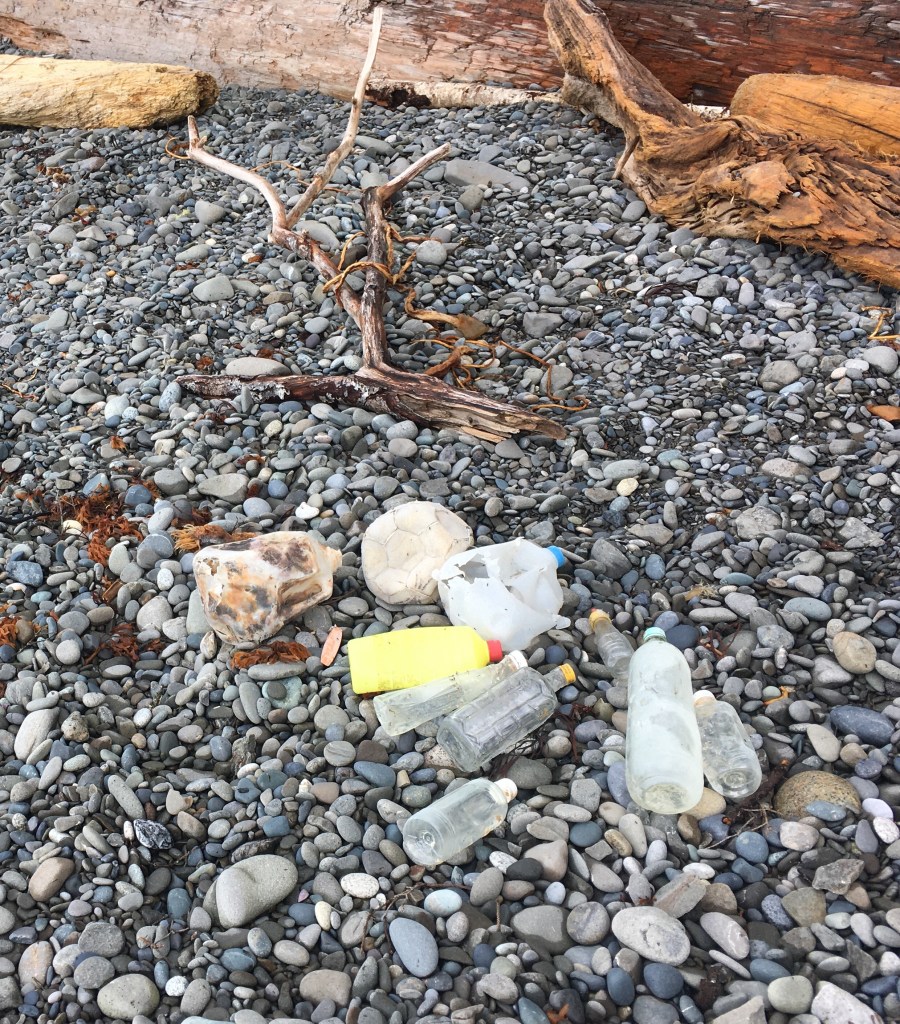
We are here for but a moment, but this is what we humans leave behind. As we walked the beach, the plastic bottles began appearing. I started picking them up, one after the other, stuffing them into my pack along with plastic caps. Large plastic floats also dotted the beach, wedged in among the logs or lying forlorn on beds of seaweed like abandoned toys. I quickly realized they were too big and numerous to carry, and with six miles to go I knew I couldn’t take them all with me. But the bottles we could carry. I wondered where they all came from—floated in from just down the road, travelled halfway across the globe or maybe even just carelessly dropped by another beach goer. It didn’t matter. All of us humans are at fault.
Josh pulled out a large garbage bag and less than two miles in we had stuffed it to the brim, along with our packs, with discarded plastic bottles and other bits of plastic. With the tide quickly rising and no more space in our bags, we trudged silently and somberly on past dozens more discarded bottles, the weight of this reality far outweighing the weight of our packs and bulging garbage sack. I imagined the miles and miles of plastic swirling out in the Pacific, lodging in the bellies of whales and sharks and a million other creatures big and small. I looked out at the ocean and silently said, “I’m sorry,”, over and over again as I stooped to pick up bottle after bottle, only to catch myself with no way to carry more.
Early on our beach hike, we came to a place called Wedding Rocks—a rocky point holding ancient petroglyphs etched by the First Peoples of this land. We stood and gazed again at these images, turned dark and rearranged by erosion and the turn of time, cast sideways and helter skelter by the shifting land. We had brought our sons here a few short summers ago, to show them this place, these wonders. We spotted the couple for which this place has been named, and the form of a ship carefully etched in the ancient rocks.

As I thought of the marks made by humans on the earth, I found myself contemplating how quickly we humans have altered, pillaged, reshaped and in many places blindly and selfishly destroyed the natural wonders of the world, causing extinctions, erosion, and irreparable damage. But we also create such beauty and marvels, in song, story and visual art such as these petroglyphs.
As the tide rose, our plastic bag bursting, and our packs heavy we approached a headland. The tide was too high to get around so we scrambled and drag our way upward over two hundred feet, with the help of a frayed plastic rope attached to the trees. From high up I could see the rugged rocks below, the ocean, the distant horizon and I made a wish.
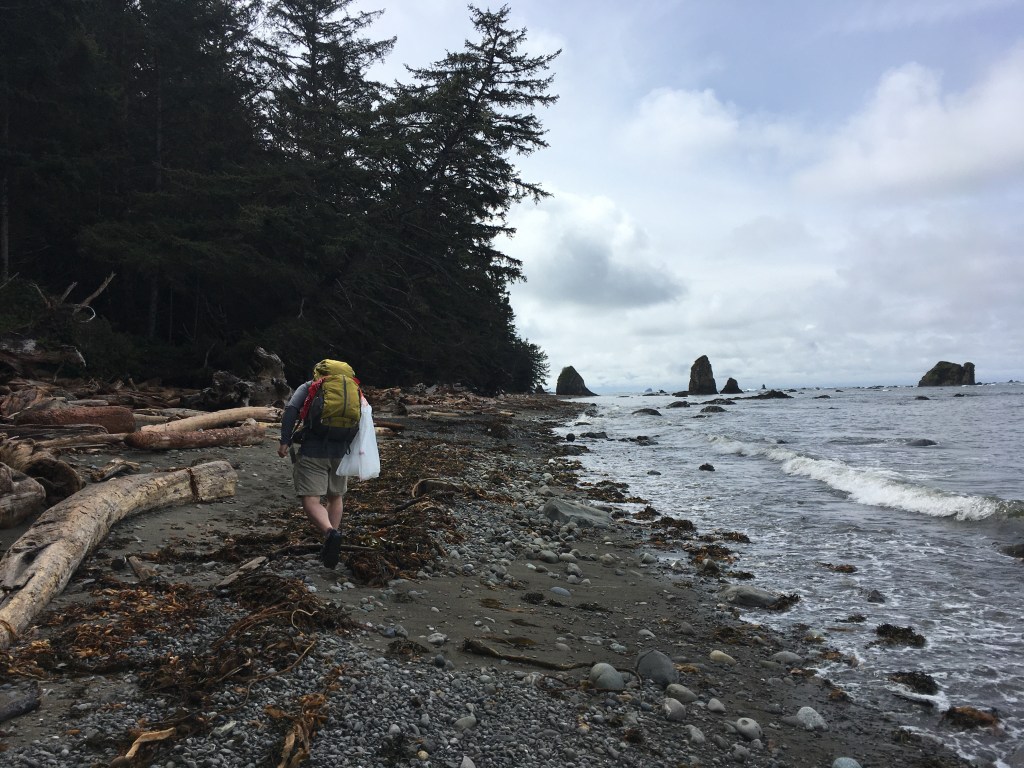
I wished for all of us to care more. Love more. For everyone to have equal access to the wilds and wonders where the land meets the sea.
One cannot visit a place like this and not be moved. The beauty is intoxicating and hopeful and eternal. We rounded a bend and found a man ducking in naked into the ocean, his lifeguard a woman crouched onshore. Averting my eyes out of respect, we passed by and I wanted to tell him I understood. The call of the saltwater is powerful. And clothes and modesty so overrated. Suit or no suit I was happy for him.
We arrived at Sand Point a half hour later, a huge stretch of sandy beach bedecked in masses of sea kelp edged by a high ridge of beach logs. The sun came out in all its warm glory, above the crashing waves where flocks of sandpipers and shore birds danced along the water line snatching food between the grains of sand.
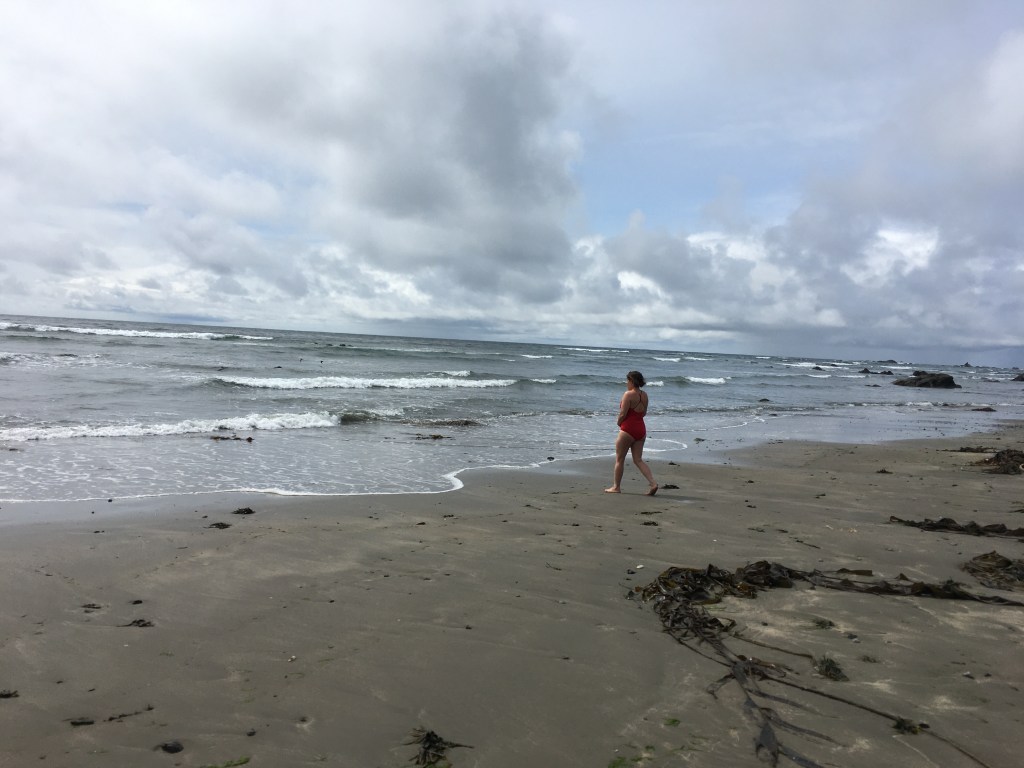
We pulled off our socks, gobbled salami and cheese with tortillas, and I prepared for a swim. Red suit on, my feet coated in warm sand, I joined the sandpipers. They parted with my arrival as I tiptoed and frolicked into the waves, imagining that I too, was one of them. Light and free and utterly fragile, and also eternal and strong and loving, like the ocean.
There were no plastic bottles nearby, to my relief, but I looked out at the water and made a promise to do better in my own ways, one bottle at a time. I made a vow to waste less, use less, buy less and reuse more. I realized that I also need to keep writing and swimming—and get outside more, and bring others with me. Perhaps my stories can also help a few people stop and think and wonder in some small new ways about how they can also make changes to save this planet.
Josh stood onshore while I moved carefully out into the shallow waters, the waves growing bigger, rocking me backwards, daring me to try.
I was very cautious. Beneath my feet I could feel pebbles and sand and large jagged rocks. This was no place to dive. We were three miles from the trail head. Not a good place to get careless and hurt.
Josh coaxed me south, where the curve grew straight, promising a more sandy bottom. I took his suggestion, found my footing over sand and pushed off, doing a shallow dive into an oncoming wave.
I popped up beaming, turned, waited for another high roller and body surfed into the shallows. Mission complete.

No—mission started, restarted, restated, stronger. The Pacific took me in, spit me out and woke me up, not unlike her younger sister, the Salish Sea.
We hiked the last three miles through the trees as rays of sunlight lit up the flora and fauna like spotlights on rock stars at a concert. I told Josh on the hike out the first day, “My eyes are so happy!” The million shades of green and brown, the shapes and angles and layers of life tumbling over each other throughout the forest like an endless waterfall.
I knew I couldn’t capture the feast before my eyes, in photo or word, to possibly do justice to the beauty we witnesssed, any more than I could possibly articulate the weight of sadness and fear I hold for our planet’s future.
And we ran out of time to be away.
We drove home to our sons, our jobs, our responsibilities, our messy house, our weedy garden and our one-eyed mutt, with a slightly different perspective and a renewed love of the wild.
Now we just need to find more ways to give back, take less, use less and pay forward all of the gifts we found at the edge of the Pacific—minus the plastic.

 Mary Swims
Hooray, Mary and Josh!!!!
>
Beautiful… thanks for sharing… 🙂