Through the cabin walls the muffled voices of a single banjo and guitar, and the swerving, deepening voices of teenage boys reach my ears. Behind me the chop and dull thud of axe into wood and before me over the occasional chirrup of a bird and familiar jingle of our dog’s collar I hear the steady hum of Goat Creek.
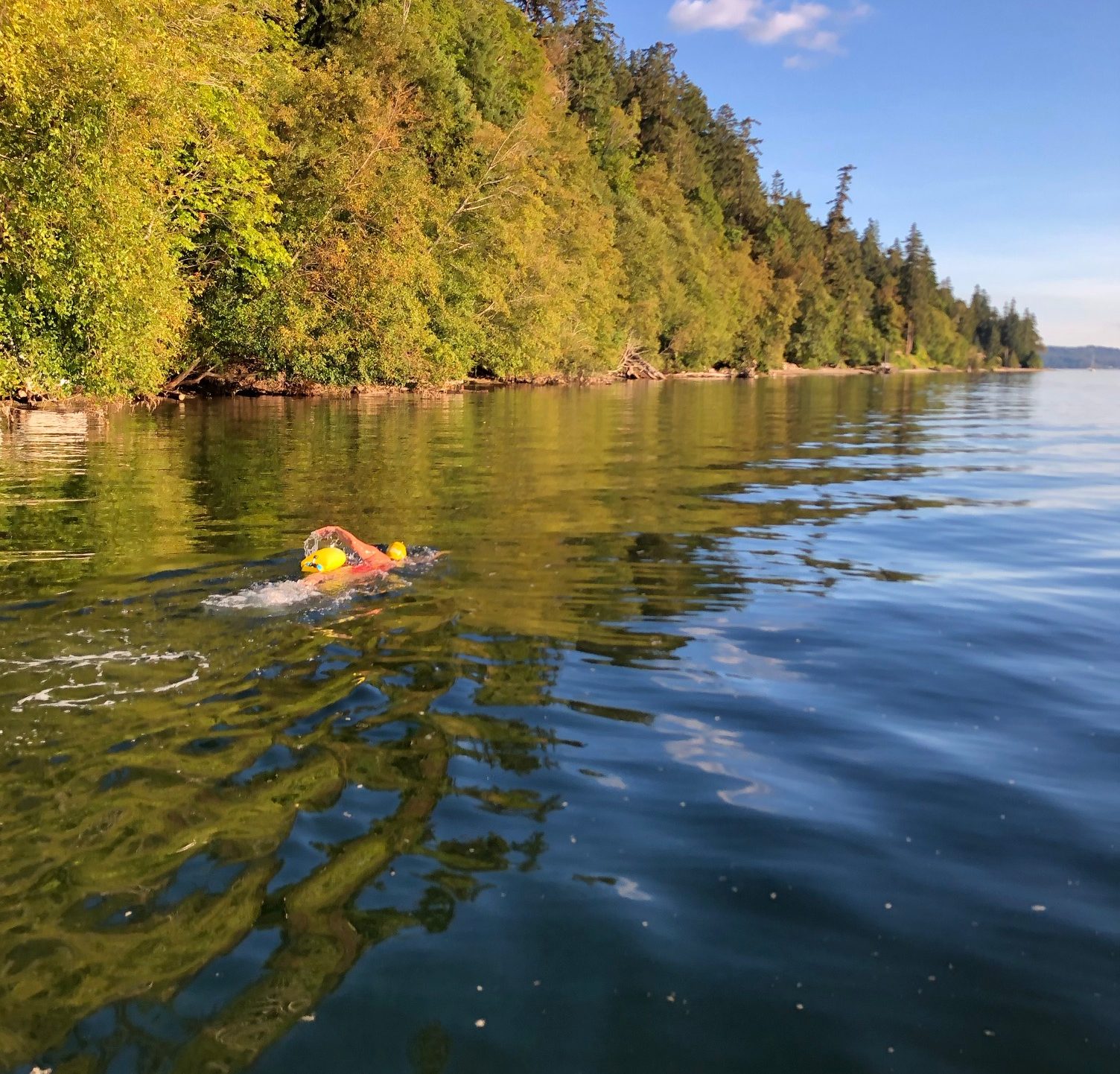
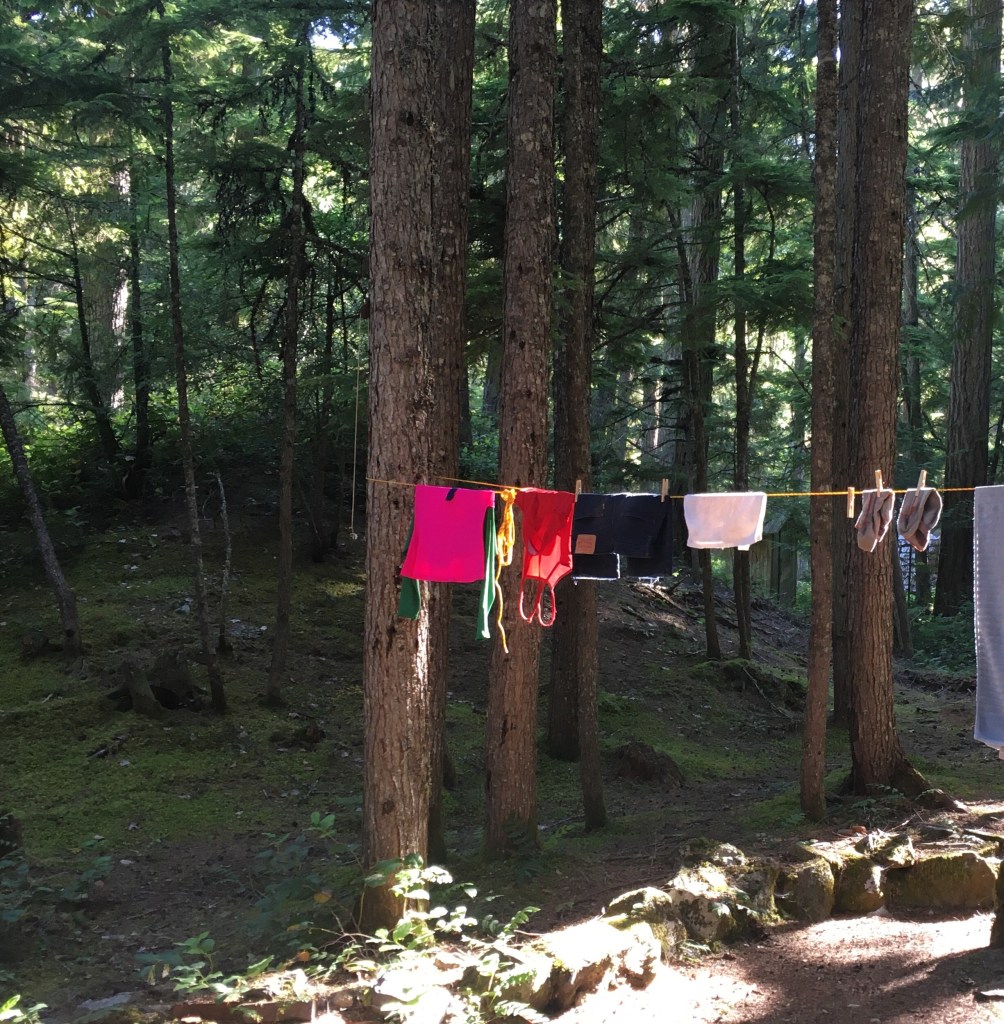
To my left hang a colorful string of swimsuits and towels, hiking socks and stained t-shirts, like prayer flags they promise peace and sweet memories of a week well spent here in the mountains in the shadow of Mount Rainier. The bright pink and green of my swim shirt catches my eye and reminds me of the water all around, the countless swims I am so grateful for, and this life I am living as best I can.
Sunlight filters through tall, slender fir, hemlock and cedar trees, lighting up the carpet of dry, bright green moss hugging the trees and carpeting the shady ground. I look skyward through curving dead branches and tender new tree tips swaying in the warm breeze to a sky of solid blue.
I kick off my shoes to lay my feet bare and warm into the well-trodden dirt, soft and light as cake flour. I wander the outer walls of this cabin, as familiar as my childhood home, a place now inhabited by strangers.
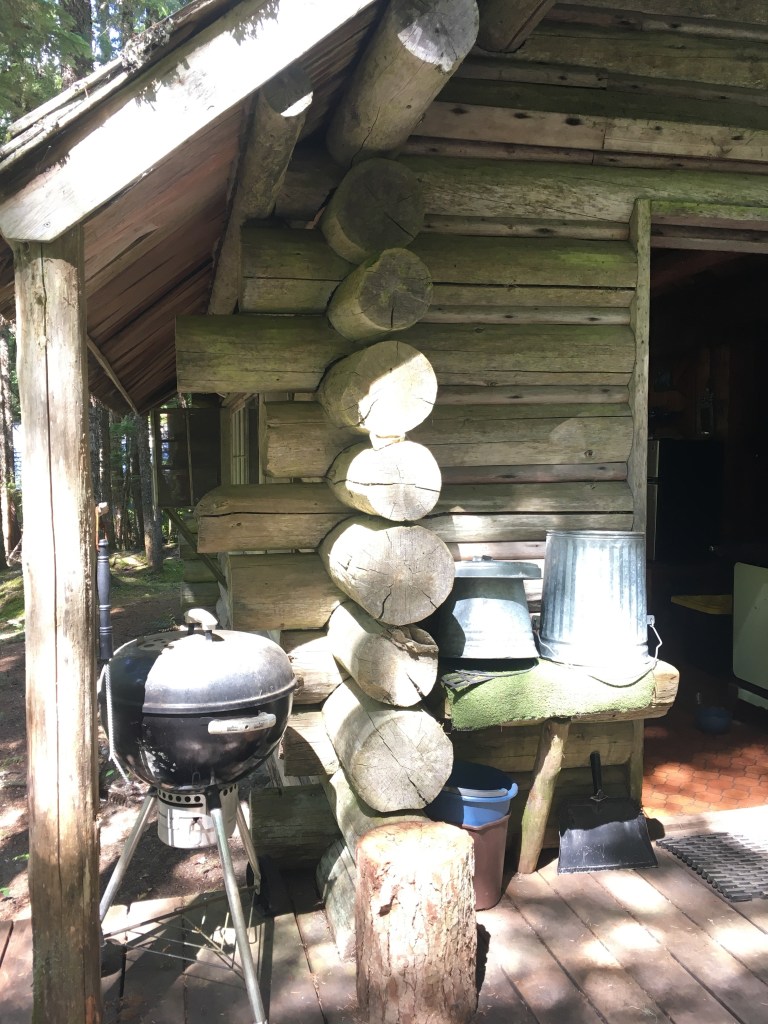
This cabin on Goat Creek remains the storing house to years of childhood memories, my own and our two sons. The last remaining four walls and roof I may still visit to feel and smell and hear and touch edges of log walls and cobwebbed windows where live on stories and songs from my childhood and motherhood years.
Among the pine needles and salal, spiked Oregon grape and ferns, I think I spy the remains of a gnome home my sister and I built years ago. Whispered memories of tiny gnome hats and tales of evil trolls swirl through my mind, as I look to the forest surrounding this wooded oasis. Up the small hill beside the cabin I can still hear the echoes of laughter and muffled cheers from countless sled rides down this hill, once as seemingly big as Mt. Rainier.
Not much has changed here, just all of us.
The musty smell of cobwebs and mouse droppings and wet socks and bacon and donut holes still lingers inside the four walls, and the outhouse still holds that smell that only an outhouse can. The two kitchen doors swing and sweep shut with the same clamber my ears know as well as my sons’ voices. Sounds seep through the tiny cracks between the old cabin walls, muffled and softened as they push through old wood.
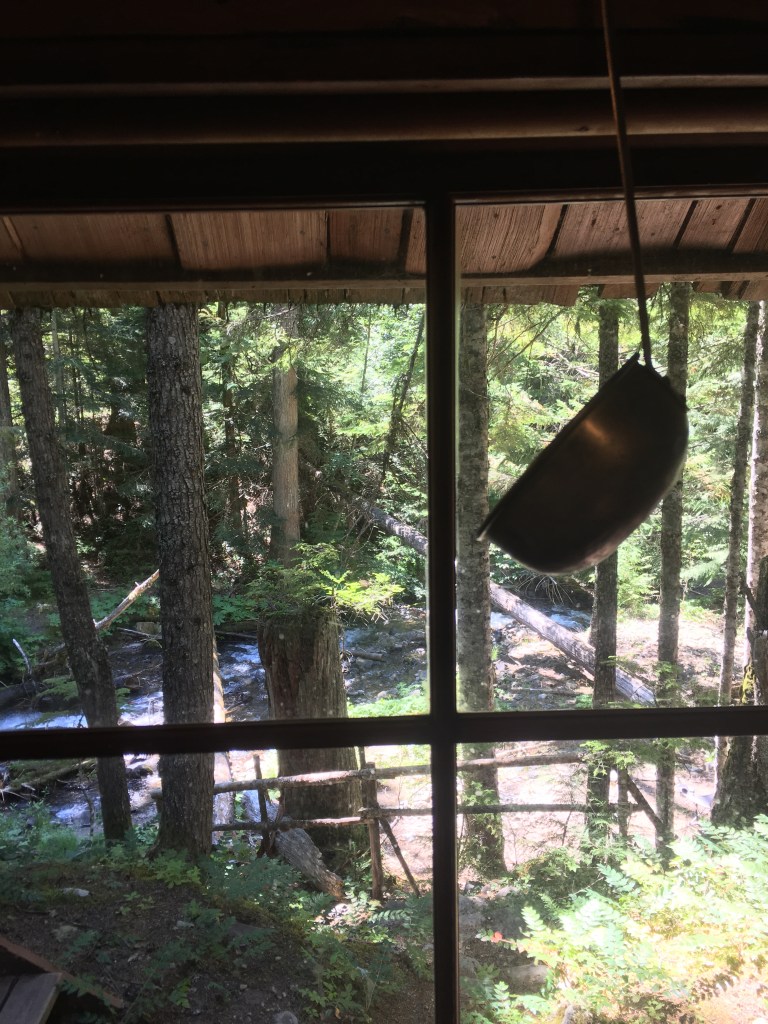
The bank of single pane windows in the long kitchen still opens to a wooded view of the creek below that we still scramble down to for the icy water that cleans our sticky hands, cooks our food, and washes our greasy dishes. Stockpiles of toilet paper and paper towels and Ziploc bags still crowd the cupboards along with a hodge podge assortment of stale soup cans, hot cocoa mix and Log Cabin syrup—all lost in time and space. They stand at attention, along with rows of old and new spices and bottles of cooking oil—guardians of this unique place. Like precious museum treasures this odd assortment of ingredients stay on through the years, almost as if their disappearance would cause the memories to disappear too. I find them oddly comforting, dust and all.
A tin wash basin huddles next to a bar of old green soap near the ice box window, where we stored our food in wintertime before a mini fridge arrived. We still store some of our food there, protected from the mice and a unique tradition solely honored at the cabin.
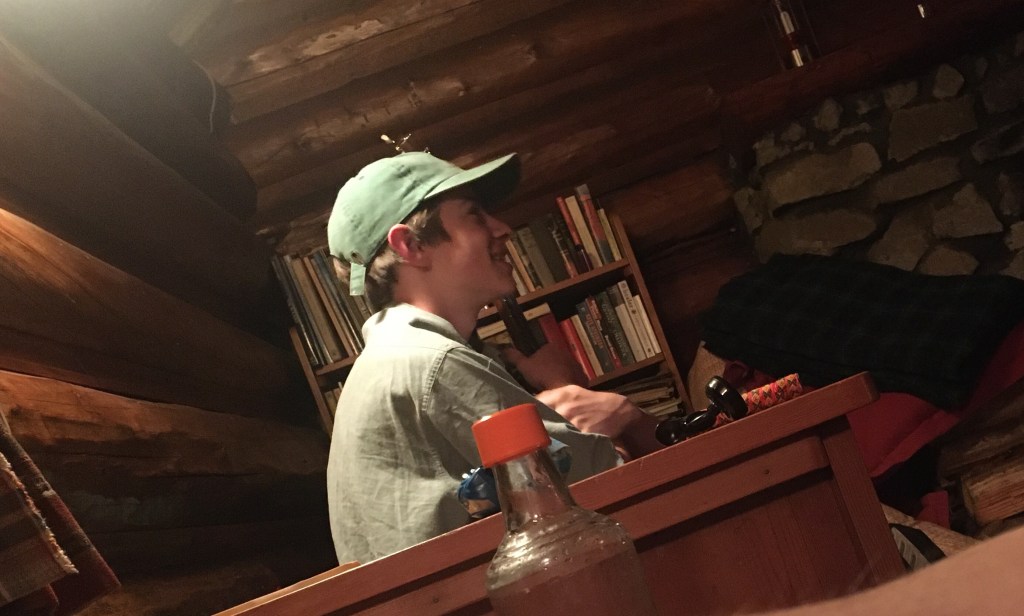
When I was six years old, my family became part of this place. The cabin log book gifted to us by my dad’s sister is inscribed with a note, welcoming us in and wishing for our family to make many memories here and remember our Norwegian roots through the joy of visiting this “hytte”.
I recently learned that over a quarter of Norwegians own a “hytte”—a small cottage in the woods. The six of us cousins who were brought here from a young age, also happened to be a quarter Norwegian. My siblings and I have additional Scandinavian blood through my mother’s Danish ancestors as well. Just a coincidence, mathematically speaking, but kind of a cool thing to realize all the same.
The three families that shared this place, including my own growing up, all had a log book. Over the last 19 years the pages in my family’s log book have mostly been filled by my own visits here with my husband and our two sons. Traditions grew organically out of our annul visits or bi-annual visits here. Just as we must read “Axe Handle” from the bizarre book of Norwegian folktales every time we visit, we also never forget to sign the log book or buy a pack of low quality, high sugar donut holes from the Enumclaw Safeway. Traditions are sometimes born quietly, but die hard. Even ones that give you tummy aches.
This latest visit, like all of the visits here over the years, was unique. Just like swimming, no two are ever alike. We didn’t come last year, when the grip of COVID held us home in fear and apprehension. Traveling even this far felt like a bad idea. So after a long spell away, we returned to this place, and for the first time since becoming parents almost 19 years ago, we came here without our eldest son. To keep the number the same, and to the delight of our younger son (and us) we brought along his dear friend, Hugo.
Our eldest had other plans, and though we missed his presence here, we know he was doing what he needed to do.
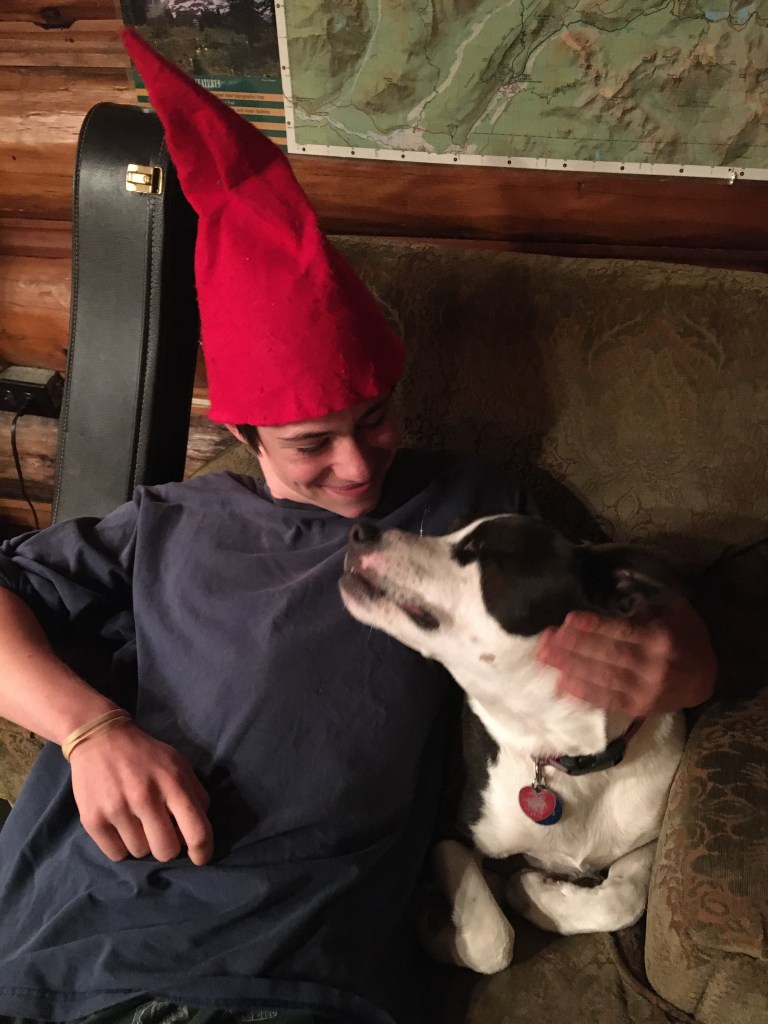
We filled the week with lazy mornings watching the waters of Goat Creek burble and sing by, spent a couple lazy afternoons wandering the woods near the cabin, unleashed clay pellets with sling shots at unsuspecting aluminum cans, stacked firewood and listened to notes drift off the strings of guitars and one banjo. We ate, watched our dog leap and frolic like a new pup chasing squirrels, read books, drew pictures and lived utterly unplugged—even the emergency land line was down.
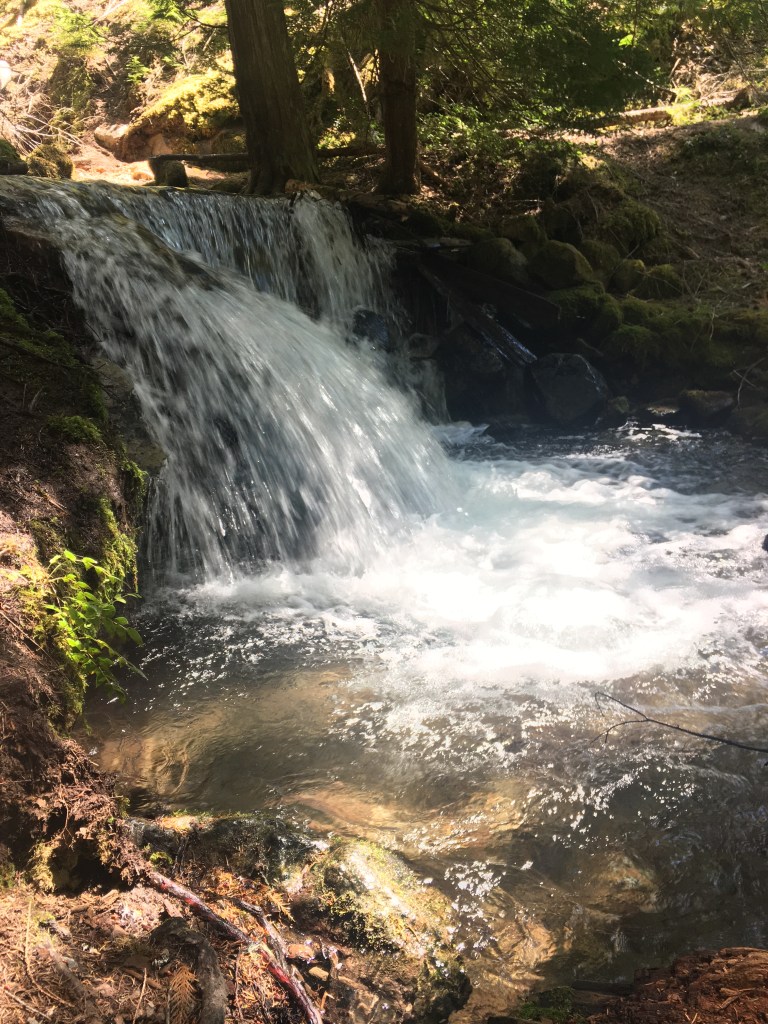
The cabin unlocked playfulness in all of us—including my initiation into a well known game, Dungeons and Dragons. I chose to be a forest gnome. Our son even packed the beloved gnome hat I made years ago for our eldest son’s first Halloween, and wore it proudly much to my utter delight. Even on the verge of high school himself, the little boy in him lives on wild and free.
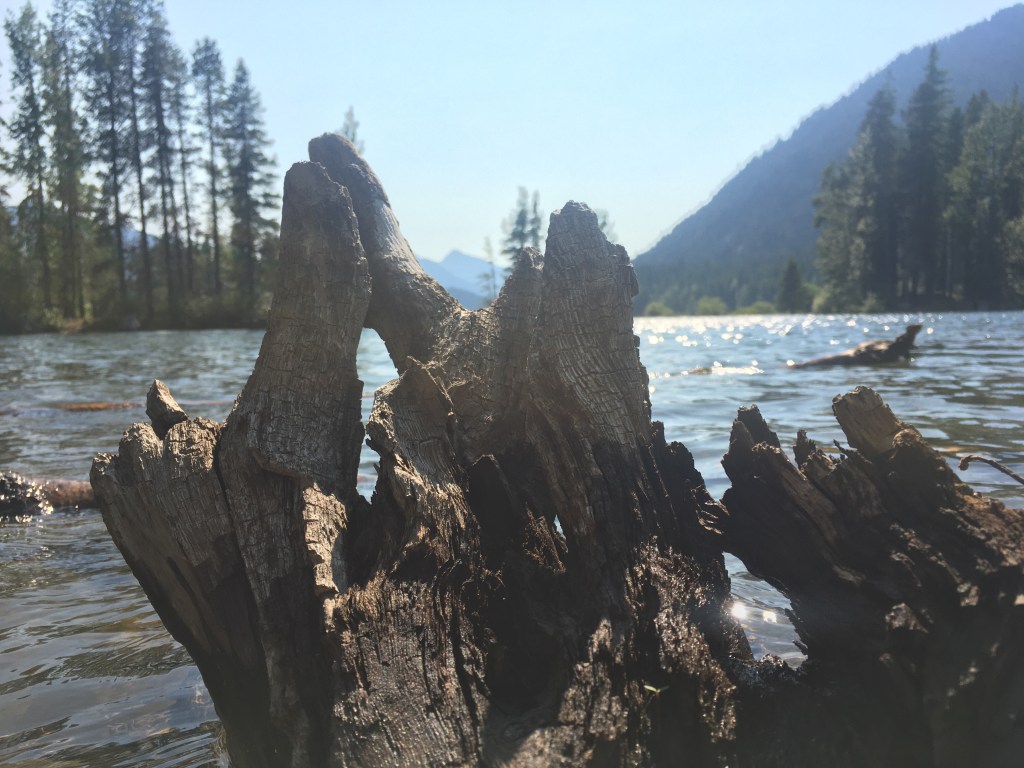
With the hot weather as a motivating force, we drove to Bumping Lake twice for glorious swims, past acres of charred forests, blackened by last year’s fires, past lush meadows brimming with wildflowers, and rivers rushing with runoff from the hot summer melt. We had never been before, but the hot hour-long drove proved well worth the effort.
Our first visit early in the week was on a sweltering day beneath cloudless skies. The water was bath water warm, the shallow lake was a mottled collection of half submerged stumps, ringed by leafy trees and grasses. Shallow water hiding submerged tree stumps made for a largely boat free swim, save the occasional paddle board.
I swam easy over a muddy bottom, past submerged stumps, the familiar unfurling of my body soothing and kind. The salt-free swim was a surprising change—with less buoyancy to hold me afloat and sweet, salt-free water touching my lips, I was keenly aware that I was not in the Salish Sea. In addition, I happily relaxed into the blissful realization that there was absolutely no chance of running into a stinging jellyfish!
My husband and I took a rare swim together to a small island studded with trees and a few fire pits. I was so happy to be swimming with him, my mountain man not nearly as crazy for water as I am.
This tiny island lies nestled within the lake, an odd mix of submerged forest and watery beauty tucked in the mountains east of Mt. Rainier. The serene lake and clear water won me over, despite my strong distrust of lakes and the plants they contain—especially the ones that seem to reach up and grab you. But this lake was largely plant free, with mill foil no where in sight.
We walked the deserted island, gazed at the sunny water and swam back to our picnic, where the boys waded in the shallows wrestling a giant log between them.
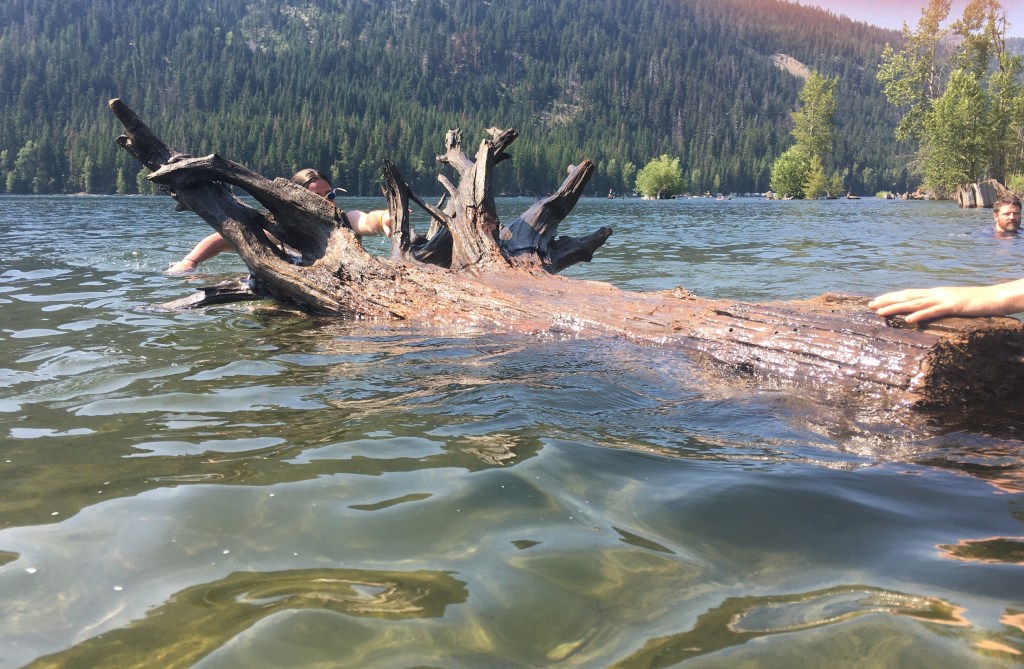
Our return trip a few days later felt like a trip to an entirely different lake. Tall, gangly trees knocked against each other like a bad drummer, off beat and unexpected in a blustery wind. Across the lake beyond the tiny island, white caps danced and fluttered about.
Anders’ friend and I, the attending water rats, were not deterred by the colder water and wind, and pushed out into the shallows and swam zig zags in the small cove. We took turns with my goggles to study the world below, and during one of my searches I happened upon what at first appeared to be small, fat bellied fish. As my eyes adjusted to the light, I squinted hard to find myself swimming over a pod of dozens of tadpoles, with tiny back legs forming on either side of their plump bodies. I was ecstatic! Another first in the water—a swim with tadpoles.
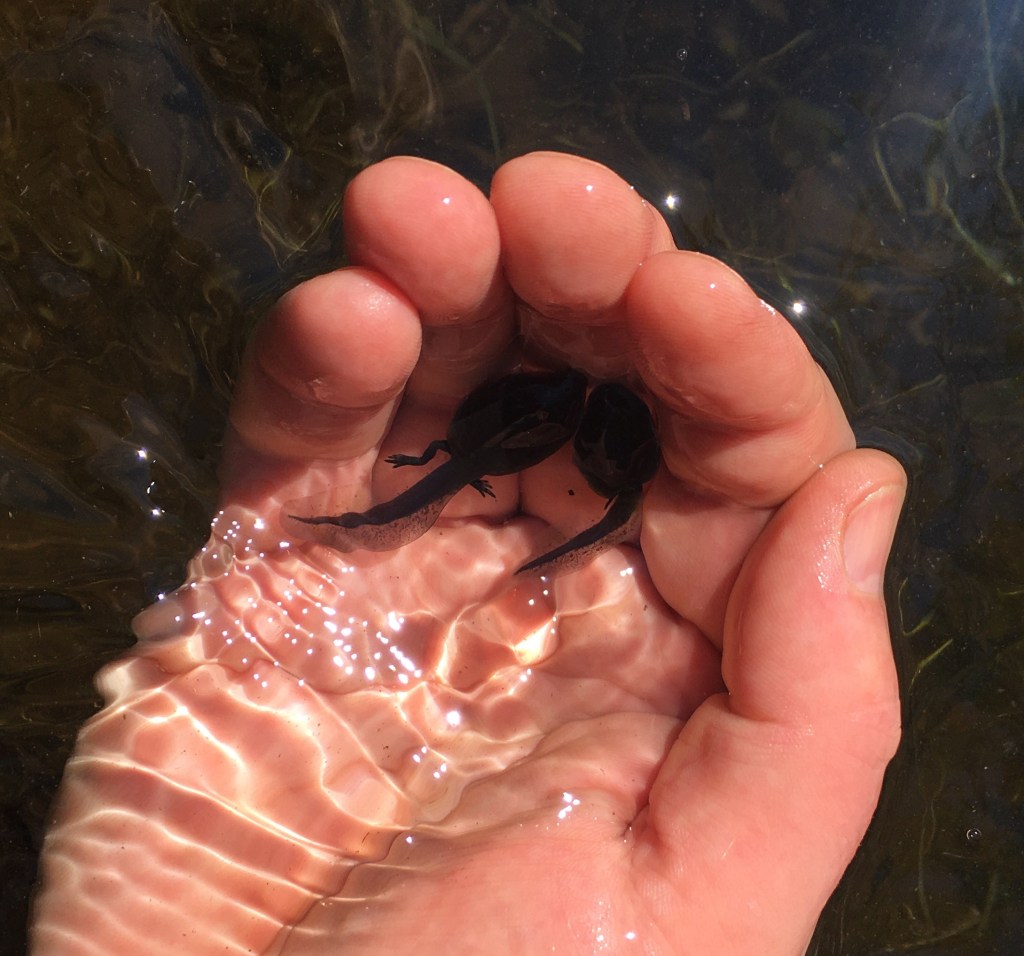
I hollered to Hugo and tossed him my goggles to investigate. We spent the next hour following hundreds of tadpoles around the lake. My husband and son joined us to watch these little mysteries wiggle through the cool water. Below the windy water hundreds and hundreds of tiny black tadpoles swam about. They moved slowly below us while we scooped up a few at a time in puddles of lake water to gaze at these tiny miracles of nature. Like plump black plums with tiny tales they traveled in massive schools through the lake grasses.
Our cabin trip also included a visit to the Grove of the Patriarchs, where dozens of ancient old growth cedar and fir trees reside, some with circumferences over 25 feet, with birthdays farther back than when Europeans first set foot upon the First Peoples lands of the Americas.
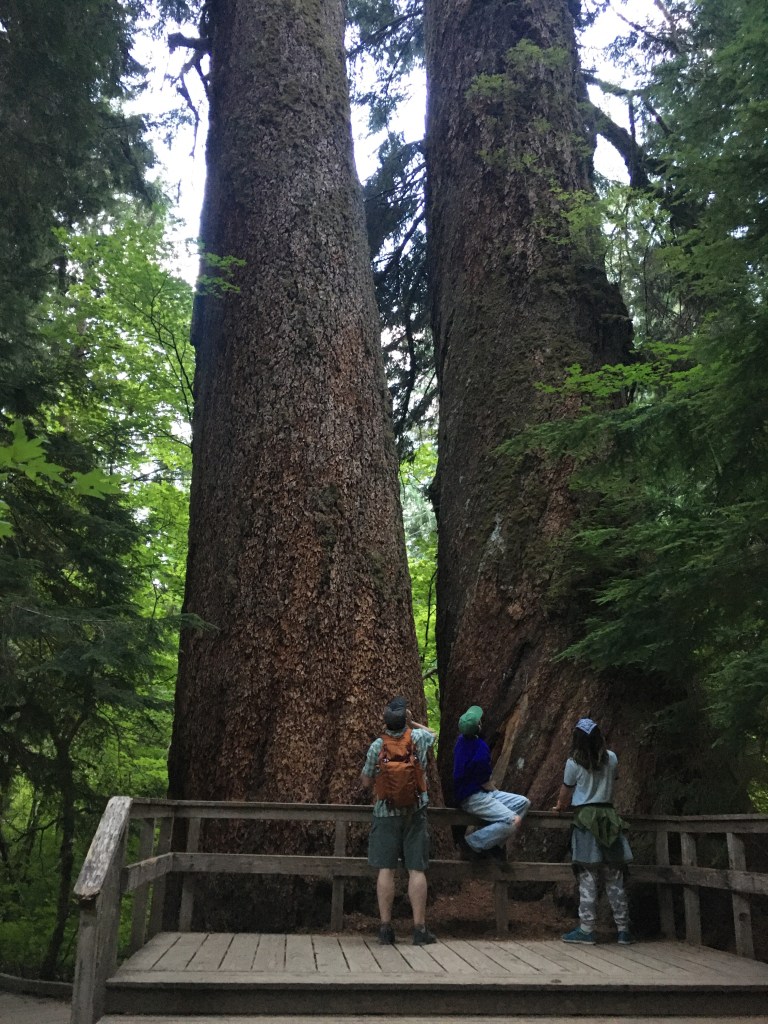
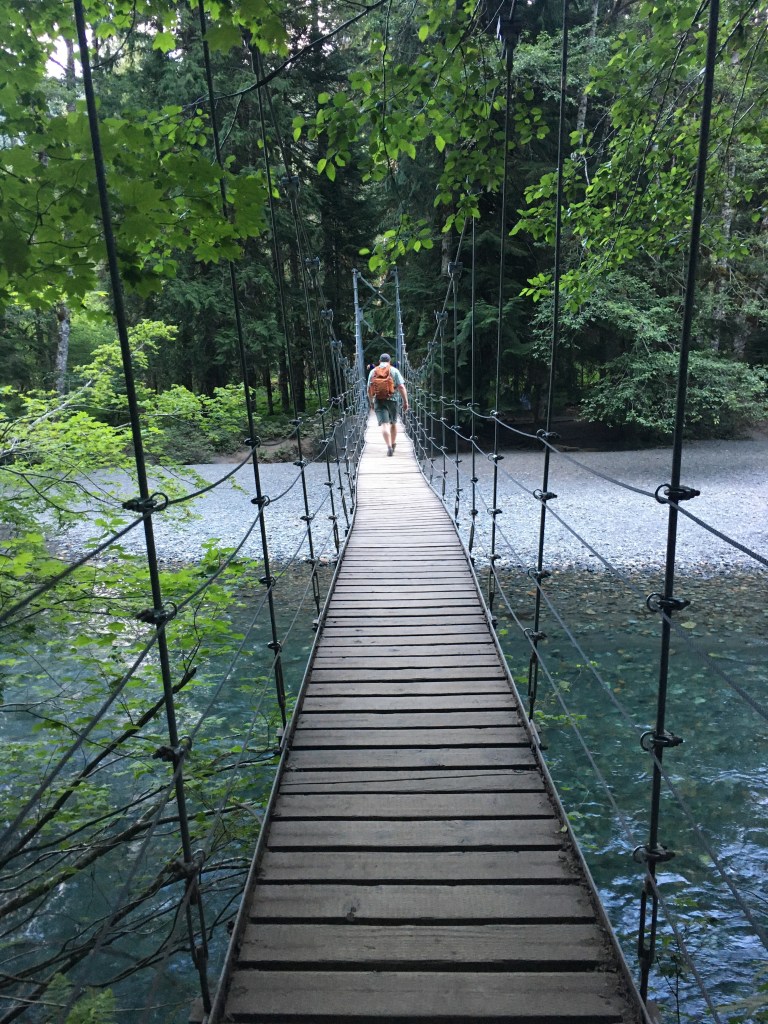
We crossed a suspension bridge over crystal clear water to gaze at these massive life forms, protected upon an island for centuries, fed by rotting logs and seasons upon seasons of snow and sun and rain and wind. These massive trees silently called us to be silent, as we strolled below them, gingerly touching the ancient bark with our soft fingertips, at a loss for words.
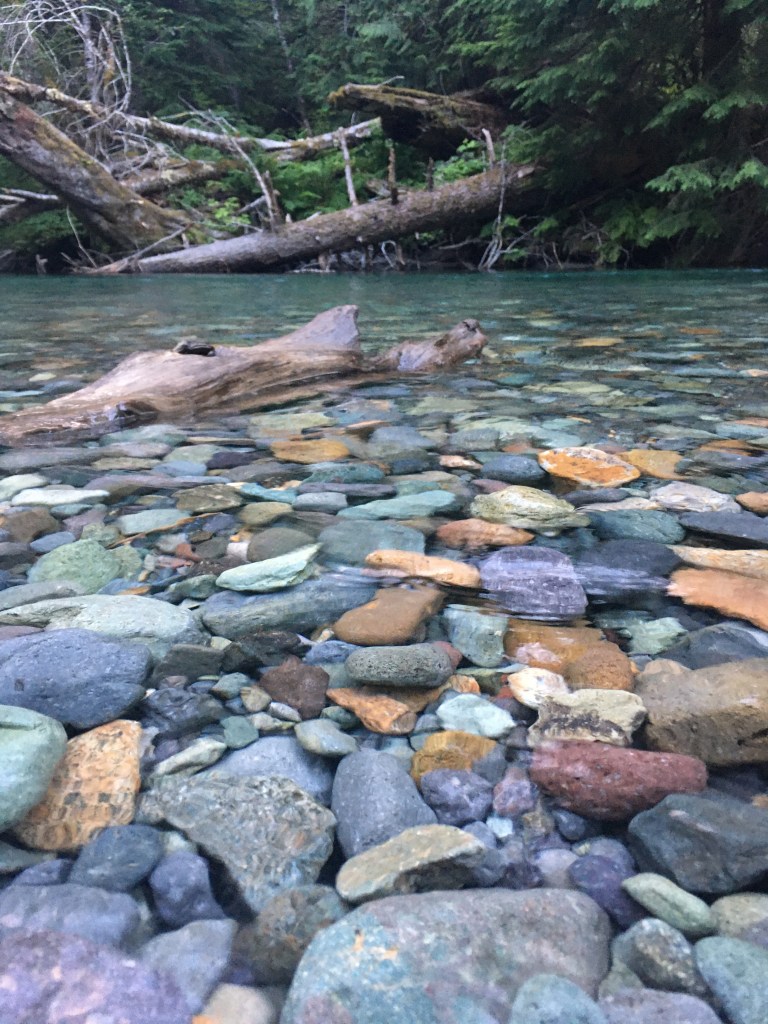
One day we pushed ourselves through a very hot, strenuous hike up towards the Emmon’s Glacier and were rewarded with chance encounters with strangers, including a woman who grew up in County Clare, Ireland, with a cousin who owns a pub that we had visited on our honeymoon twenty two years ago. The world got even smaller in that serendipitous moment!
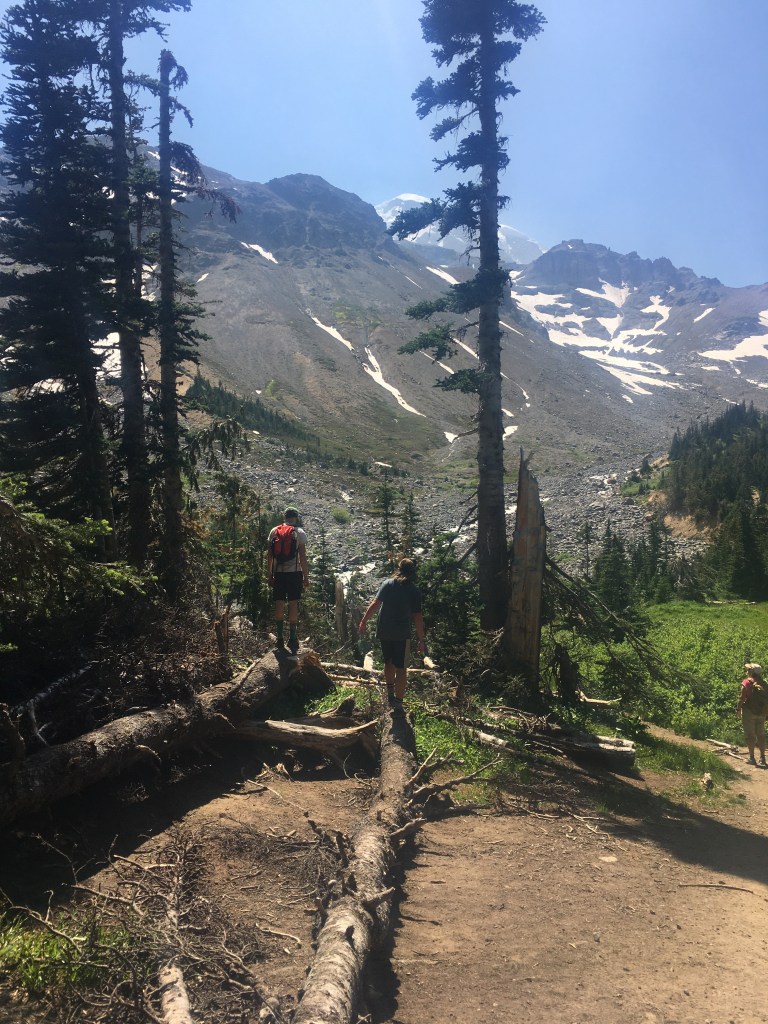
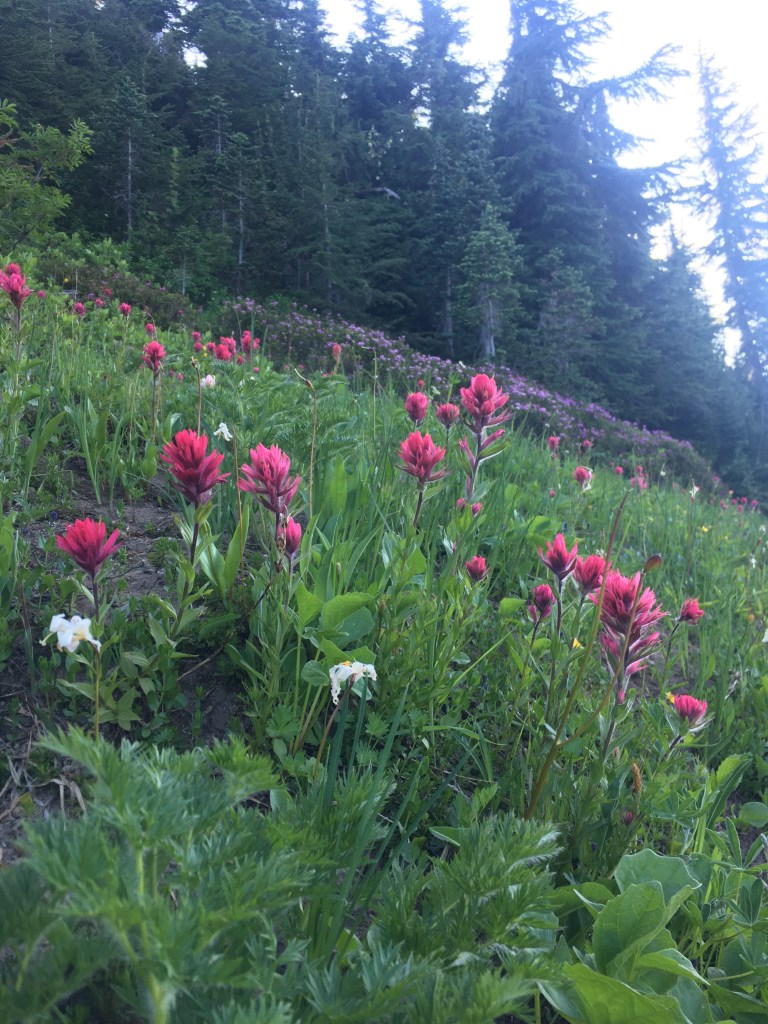
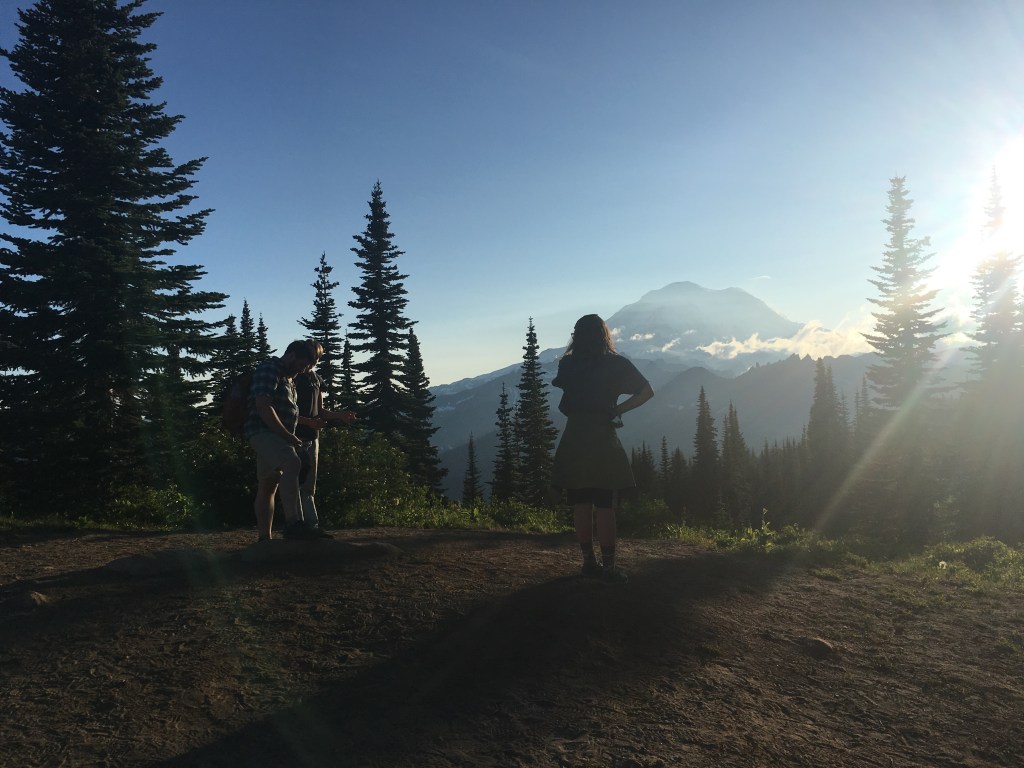
We went high too, around the Naches Peak Trail one evening, and walked through a three mile rainbow of high mountain meadows bedazzled with wildflowers.
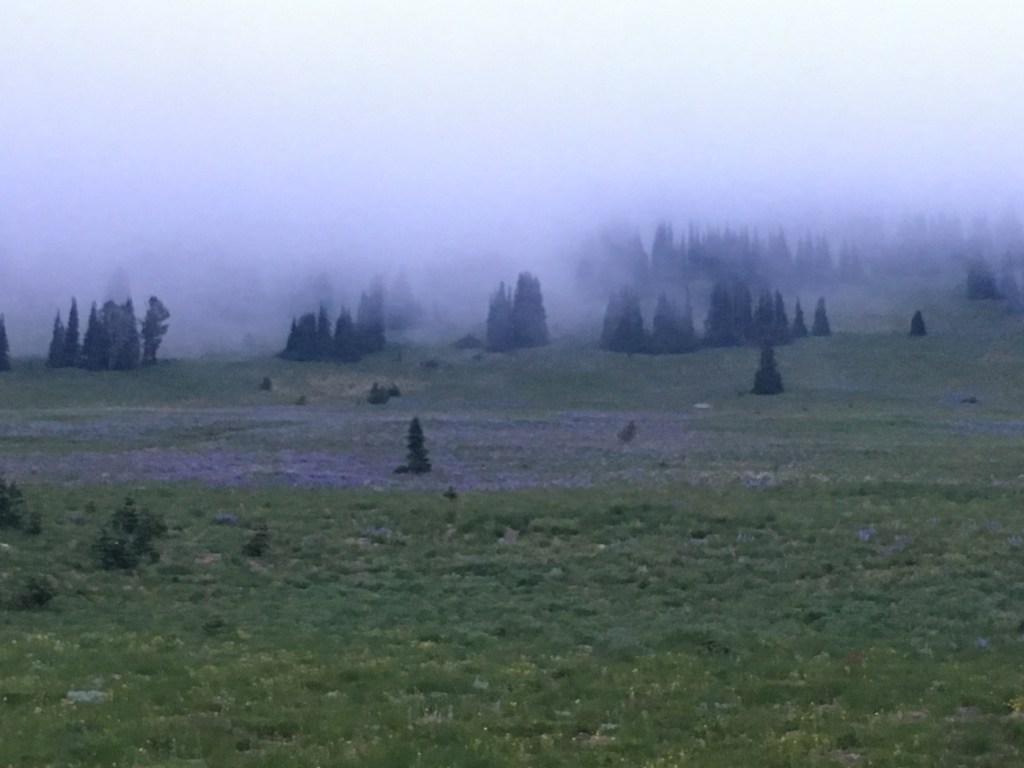
Up at the Sunrise visitor center, just after sunset we watched thick clouds roll down through blackening trees, and over enormous meadows where blue lupin flowers glowed in ethereal beauty, appearing like patches of sky fallen to Earth.
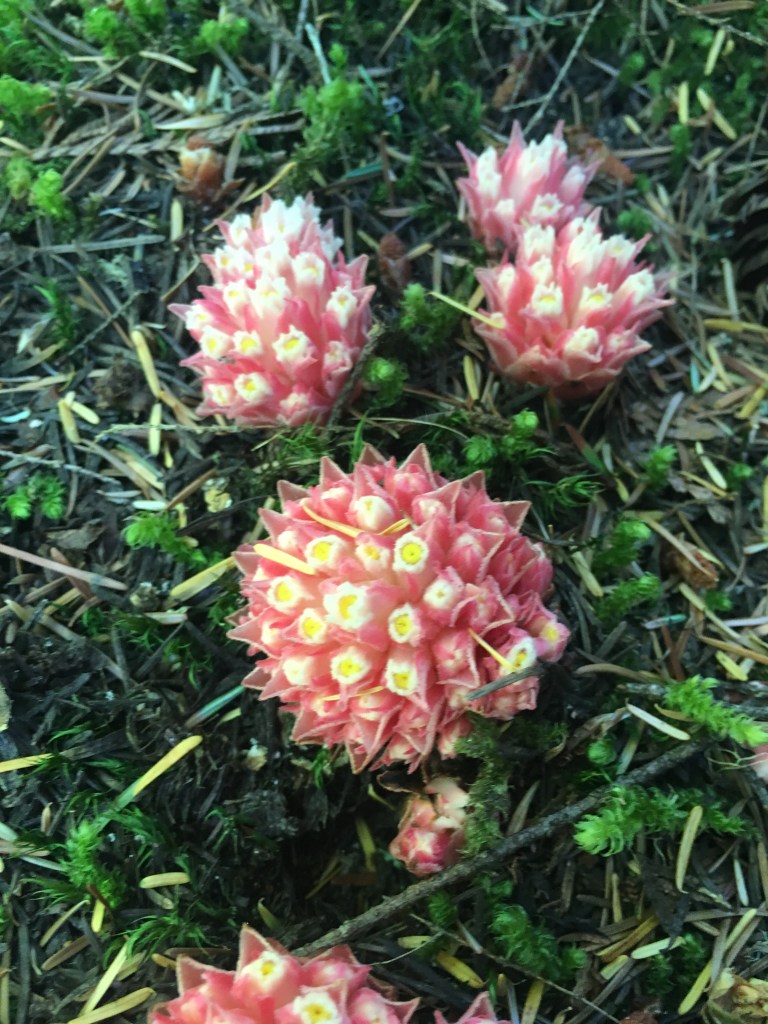
One morning at the cabin my husband came to me, curious about a strange flowering plant he discovered out behind the outhouse. He invited me to investigate this odd little plant with him. We decided it must have grown from some foreign seeds discarded by a former visitor. Fat pink petals rose in compact bunches from a mossy log. Later when we returned home Josh learned that this rare plant is called a Gnome plant. Very rare, this little surprise of living gems served as a sweet symbol of the beauty we witnessed throughout this week together.
The entire week was pretty close to perfect in fact—until I got trapped in the outhouse on the last day.
On our final day at the cabin, when everyone else was still asleep, I strolled out to pee. Since I was alone, I propped the door open with a rock. Better ventilation and a fine forested view. I had just sat down when the door suddenly slammed shut, locking me inside. The force of the door knocked the wooden exterior latch down.
I leapt up, pushed on the door and then I panicked. I pushed and pried and then started yelling for help. A million hours or maybe was it seconds went by my husband arrived in his underpants to rescue me. In hindsight I think maybe the cabin wanted me to stay—or maybe at least remember to appreciate all that the cabin gifted me. Including the cobwebbed outhouse with a plug in heated seat warmer.
After we packed up and cleaned the hytte as best we could, we said goodbye to Goat Creek. All that week, beside Goat Creek, and on our winding hikes we passed water, running downhill. Tiny streams danced through boulders along the roadway, gushing white water dashed through wide rocky canyons, tranquil lakes ringed by flowers and mosquitos reflected blue skies.
I ditched my clothes one day while out alone with our sweet dog, and dashed into a cascading stream of freezing water, pulled in and under by the intoxicating freedom I find only in water. Once again I found myself untethered and tranquil, cleansed and deliciously content with nothing but my birthday suit on, my dog standing guard, with absolute trust in me. And I absolute trust in him.
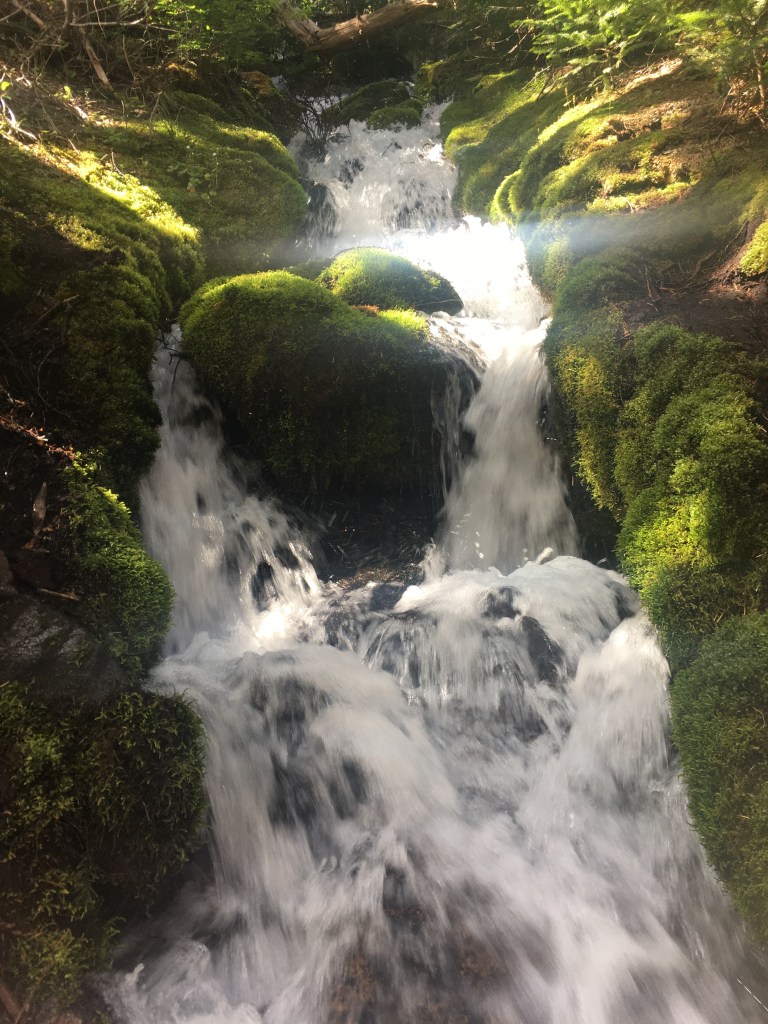
Water falls everywhere, making music, and light and life, carving new paths, cutting through stone, smoothing pebbles, creating highways for fish, feeding bears, hatching bugs, growing frogs, moving mountains and making children smile, turning adults into playful children again.
Our first day at the lake I watched my husband and youngest son with his friend roll a log in the water. They took turns trying to stand atop the slick surface, tumbling in backwards into the soft water with smiles as wide as the sun.
Joy and relief filled my being.
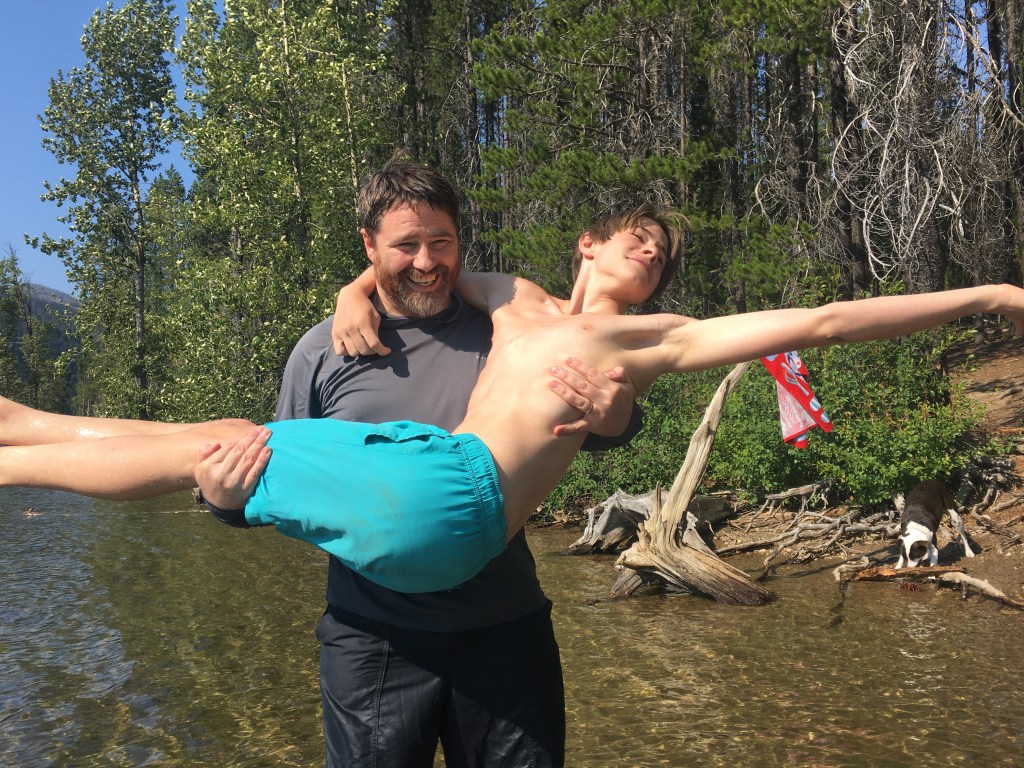
Josh scooped up our youngest son, himself on the brink of manhood, and all I felt in that moment was serene happiness. As droplets of lake water glistened on their sun-kissed faces our son stretched his long body out, confident that his dad would hold him strong and safe.
I long for radical acceptance of the changes that keep coming, the losses and gifts that keep coming. Our eldest is moving out soon, it is his time, and as we lose his daily presence here, mourn the end of his boyhood, we find renewal and rebirth in watching him hatch into adulthood, grow legs strong and able like a tadpole and spring from the freshwater a frog, into the unknown world above.
I long to be the river, flowing down and down over fallen trees, over ancient boulders, over blinding waterfalls lit up by the sun, through towns and along humming roads, past lazy cows in quiet fields, under bridges and through lakes swirling with tadpoles and fish, beside muddy ponds and under pouring rain and silent snowflakes and starry skies to arrive clear headed and peaceful into the Salish Sea.
I, like my husband, will continue to do my best to stand in the water and hold our children up, like the sea, soft and easy, with arms forever open wide to embrace them and love them with all that I am, and they, just as they are.
 Mary Swims
beautiful…
💜🍄🌻🧜♀️🌻🍄💜